ARD Creates Biased Poll, Still Loses

Gate way

The transit-oriented-denialist group the Alliance for Rational Development published a poll regarding the Tenleytown Safeway a few days ago. Not content to only use sockpuppets to create the appearance of debate, they have gotten into push-polling. Yes, they created a voluntary internet poll, one that suffers badly from both self-selection bias and leading questions. For example:

I would prefer a mixed-use development on the site that would include five or six floors of residential housing along with a new Safeway. (Safeway at present, has indicated that it has no interest in building such a development.)

Out of 95 voters, 72 said yes to the question anyway. Then there’s this:

If you expressed a preference for a mixed-use development, would you still oppose Safeway’s current proposal if the result were that Safeway decided against any redevelopment of the current store?

81% of respondents still said yes. But all this poll indicates is that activists overwhelmingly support a Safeway mixed-use project. A self-selected poll is never accurate for representing a general population, as it attracts only the most interested individuals. This survey does not, and never could have represented neighborhood opinion, even more so than the Safeway postcards.

So, I guess my point is that ARD doesn’t represent the silent majority, and they don’t even represent a significant minority. The secretive organization is nothing but sound and fury crippled by ineptitude and a lack of web savvy. I don’t think they represent even a credible opposition – and they certainly don’t support anything on their own. Hopefully, people will see through their bluster and realize that they are done.

Alas, maybe more radical action is needed. MaKrel, who may or may not be my friends at ASR, suggests something more radical:

We could demolish the Safeway and return the land to agricultural production in a cooperatively owned CSA farm. Then we wouldn’t have to eat the GM cr*p that corporate supermarket chains shove down our throats; a good example: http://www.intervalecommunityfarm.com/

God Bless Anarcho-Syndicalism. I’ve taken a screencap of the poll just in case it goes down, after the break.

Read More

Reno Park Update 100202

I’m going to recap some of the analyses I did for Reno Park within the next week or so. After that, I will be getting into a historical analysis of the geography. For now, here is a broad map of historical names no longer used at the site. Names in red were designated organically or based on the farm tracts’ names, while names in blue were attempts to brand new developments.

historical names

A Momentary Synchronization

Tower of Winds, Tokyo

I looked up from my desk this evening to see a handful of blue lights in the neatly stacked windows of the apartment building that sits across the street. Deep blue, as though the world was experiencing a collective computer crash. The color changed and I realized it was the Grammies. For a few hours, the building changed colors to reflect the shared culture of this consumerist happening.

I’m reminded of Toyo Ito’s Tower of Winds and its synesthetic translation of Tokyo’s Hubbub. And I’m reminded of my external hard drives. They have a large blue light on the front that signifies that they are on. So too do blue flickers in windows; they  indicate that the households are turned on as well.

Details, Details: Light & Shadow

white brick

A lot of architectural design deals with modifying light and shadows to make an interesting form. For example, the moulding on a neoclassical building is designed to create a specific shadow profile. Meanwhile, glass buildings tend to play with reflections. But you don’t see much of them together, like you do here.

Five Things, Arranged by Size and Scope

A few found ideas.

One: First, let’s start with what’s in the room. My friend Anna at NOMOFOMO informed me of the publishing of a rather serious book about John Cage’s rather infamous piece 4′33″. The plainly titled book, it turns out, is by Kyle Gann, probably one of the most famous people ever driven off of Wikipedia. Hopefully the book will cool some of the really obnoxious commentary that trots its tired ass out whenever you mention the piece. On a related note, I was at the Smithsonian American Art Museum when some man wearing a North Face vest walked into the room with his brood and began ridiculing the works as “The Painter who Couldn’t draw curves, The Painter who Couldn’t Draw Faces, the Painter Who Didn’t Care,” repeated smugly for several minutes. Unfortunately for his smugness, we were in a gallery entitled, GRAPHIC MASTERS III. There were no paintings so … no painters either, boss.

Two: Anyway, over in my neighborhood, Richard Layman wrote a simple piece in regard to the recent efforts to build a streetcar on Wisconsin Avenue – and the consequent vicious opposition. The arguments are not that new, but he does break down the current bogeyman that guided transit will be hopelessly snarled up by obstructions. His point: it happens more often on highways, and can be minimized with design. On that note, and getting much bigger (153 comments at writing), is the thread on DCMud about the Safegate Pause.

Three: Moving out to the general idea of the neighborhood,  Kaid Benfield penned a remarkably concise and thoughtful definition of Transit-Oriented Development. He emphasizes the oriented part, making the point that it’s the way the neighborhood and buildings facilitate transit use and walkability that is most important. It’s worth a read.

Via Elemental/Mammoth

Quinta Monroy, via Elemental/Mammoth

Four: Getting a lot bigger, Mammoth covers mammothly (as they promised) the best architecture of the decade. Unlike so many lists of flashy blingitechture and navelgazing critiques of said blingitechture and excess, the list contains projects emblematic of new directions in architecture. Included is the Large Hadron Collider, cheap manifest-traditional housing, Chinese High Speed Rail, geoengineering, and using good design to recover from years of terror. After reading it, I feel like calling this next decade for Latin America.

Five: Finally, getting into centuries and abstract ideas, Kirk Savage will be doing a live chat tomorrow on Greater Washington.  Savage is the author of Monument Wars and Standing Soldiers Kneeling Slaves. The latter book is about the depiction of slavery in public art. The former traces the role of the monument in America over two hundred years as the changes played out in Washington, DC. I’m only about halfway through the book, but it is really good. He puts an impressive amount of information about monuments, memory, and architecture into a genuinely enjoyable read. I don’t have enough thoughts at the moment, but there will be more coming from it.

Until 1 PM Tuesday, you can always submit questions at this page, and I’ll let you go with some bonus Eames:

Would You McMillan II?

Nir Buras is looking to redouble work on his McMillan II plan.  He asked me to post this little ad, so of course I obliged.

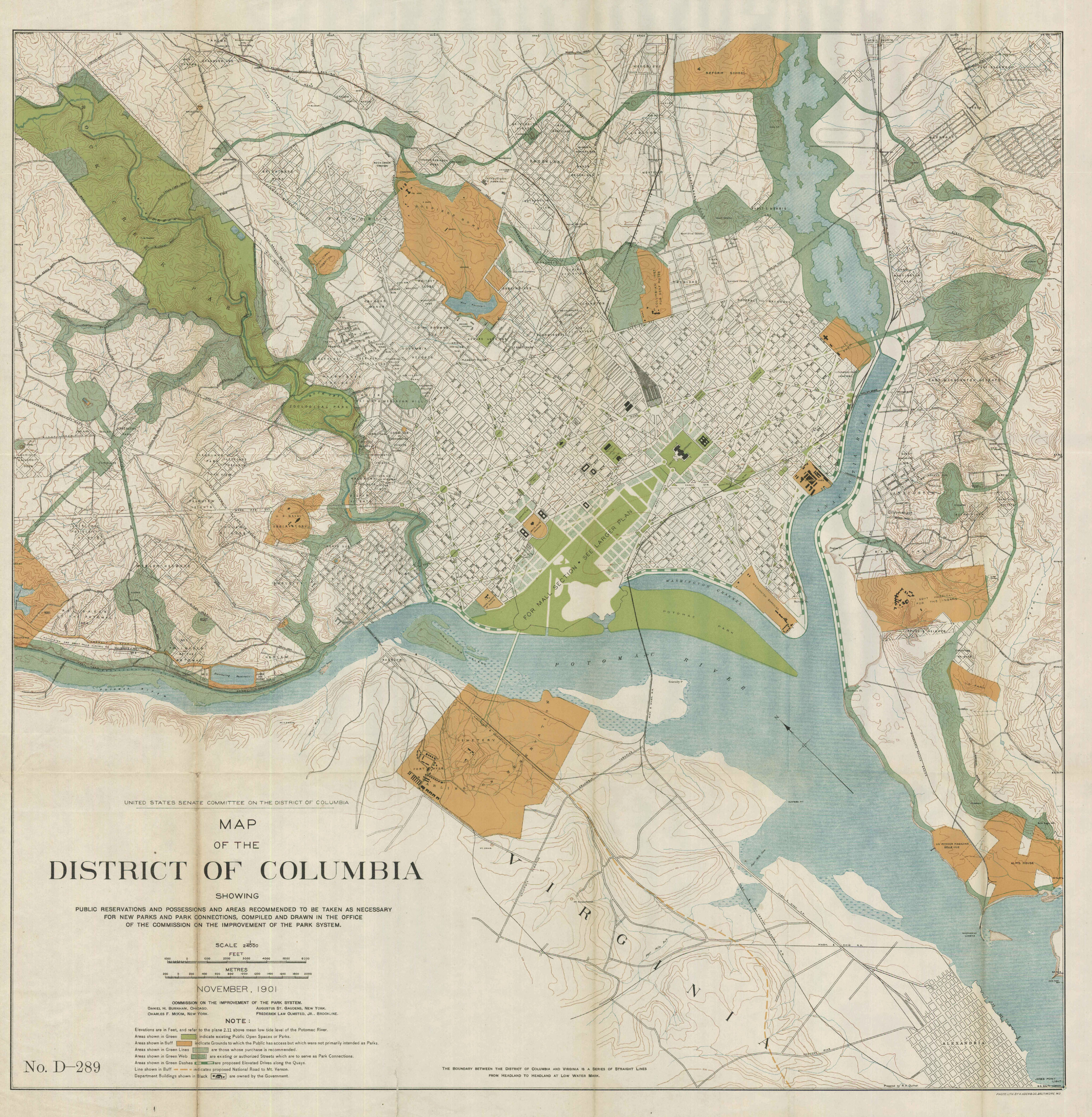
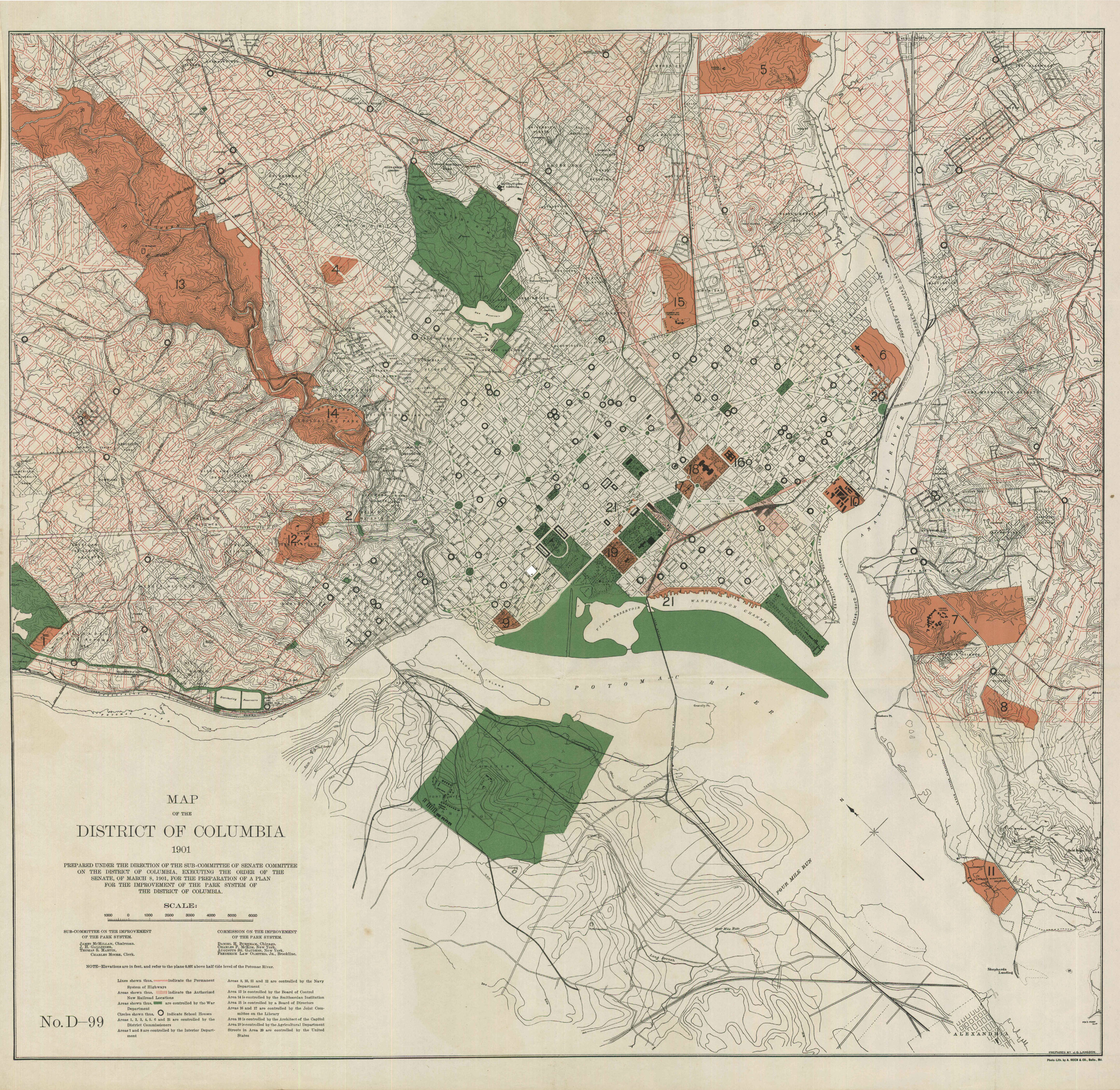
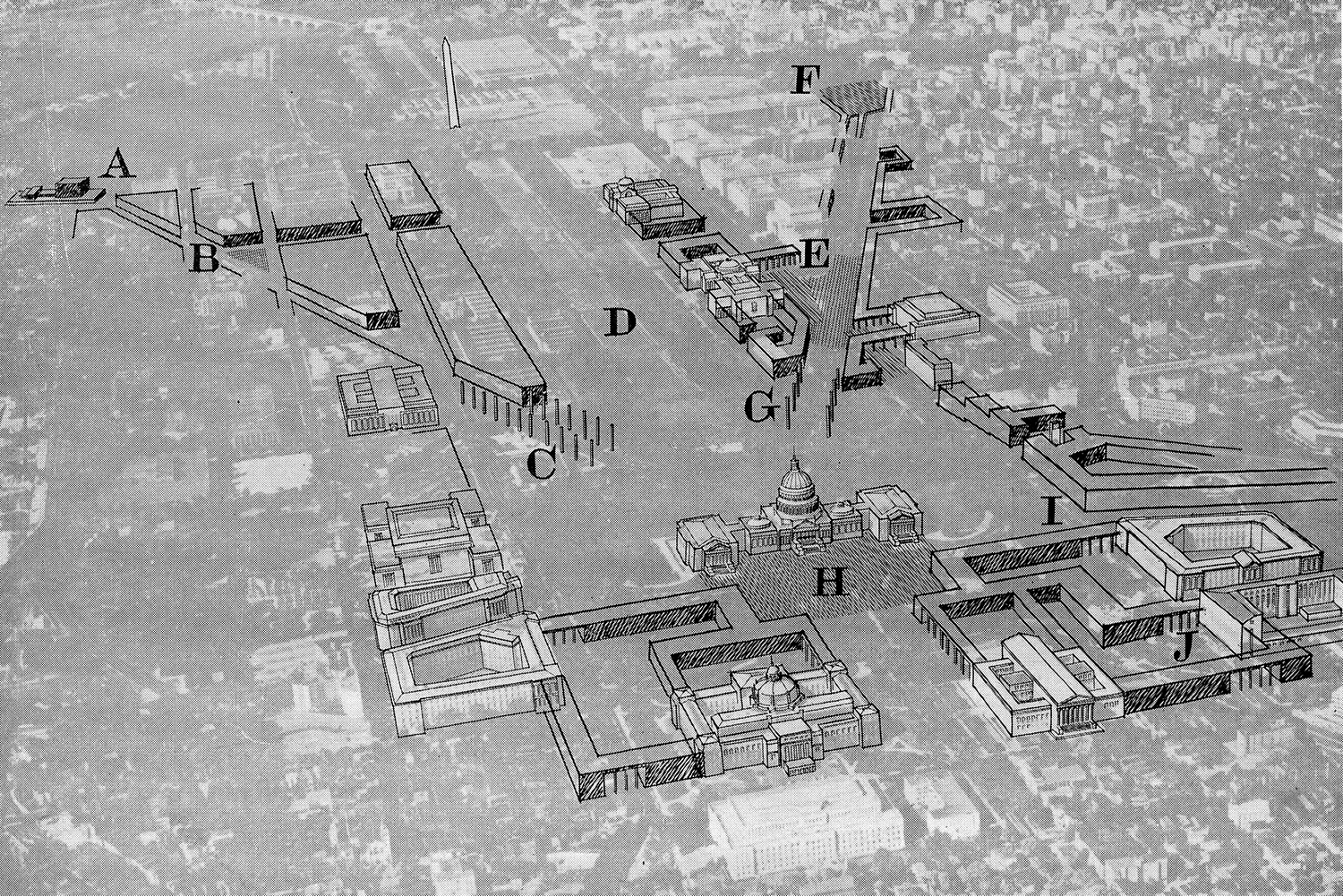
Recent construction in DC dilutes the character of the City’s built environment and it is on the verge of loosing its identity.  Obviously the City and its citizens deserve better.  The order and principles of the L’enfant Plan provided the “DNA” of the City. The McMillan Commission (1902) invented the National Mall and created many if not most of the beautiful buildings and landscapes of DC including the Lincoln Memorial, Federal Triangle, Rock Creek Park, the GW Parkway and more. The McMillan II Initiative proposes architecture and City Building principles commensurate with DC’s legacy and its world role. It will enable healthy “green” growth for DC, provide longevity and promote timeless beauty into the 22nd Century and make DC a WorldClass City.

The first round of McMillan II recognized the mile-wide no-man’s land of freeways and underused parks existing along the Anacostia River, much of it on Federal land. This disconnection is the City’s urban, social and political nightmare. DC needs a healing act, both literally and figuratively, stitching together this urban gash for the social, economic and civic benefit of all. The first round of McMillan II was recently made public on the Kojo Nnamdi show and numerous blogs. In the second round we seek participants to assist in further detailing the plan and ground it in the best sustainable, economic, hydrological, financial, urban planning and design practices. Skills sought include collegiality, reading, writing, drafting and computer graphics, modeling and animation, video, sketching and water coloring to further develop and repackage the project.

For participation, please contact Dr. Nir Buras at info@buras-classical.com and state your relevant interests, skills and experience.

Additionally, he and I are intending to hold a salon to discuss the plan, its underpinnings, and its consequences at some point in the future. If you’re not interested in working on the project, or if you’re like me and enjoy a good debate about architecture, that might be more your thing. Stay posted.

Duke Ellington May Leave Northwest

This topic is a little out of my usual purview, but it’s worth commenting on because schools are so necessary for smart growth – and are such a bloody issue.

DCPS Chancellor Michelle Rhee is apparently considering relocating the prestigious Duke Ellington School of the Arts to a more central location. Currently, the school occupies a historically significant building in Burlieth, but if the move goes through, the school will move into the old Logan Elementary building near Union Station. In its place, a new High School serving mostly Ward 2 students (according to Councilmember Jack Evans) would begin operating.

For the most part, I support this move. Locating the building near a metro station will make it much more accessible for both students and teachers. Logan would also require a renovation, which would hopefully allow for some great new architecture and preservation by a local firm. The building seems dilapidated and lacking in the relevant facilities – and theaters demand great architecture. It could be a win-win for DC and its design community.

But much more importantly, opening up room for a new public high school in Northwest will accommodate new families who will undoubtedly come as appropriate development restarts in Northwest. Don’t forget, the building now occupied by Duke Ellington once held Western High School, one of two high schools in Northwest, along with Tenleytown’s own Wilson. Wilson is now pretty crowded. With more residents along Wisconsin and Connecticut, it will need to more room even than what the current renovation will provide. Private schools cannot be the answer anymore – St. Albans, Sidwell, Maret, and GDS are already larger than intended – and the costs of each are way too high for most families, $30,000 per year for some.

Backlash and speculation has (unsurprisingly) followed the discovery of the plan. Is it a racist plot to get black kids out of Georgetown? Apparently some assholes not only think so, but approve. Perhaps its is just a ploy to get better test scores from parents unable to foot private education. That’s plausible to me. Either way, the students are even getting involved, with a blog and a facebook group.

But look at it this way: growth in Northwest means slower growth and minimal displacement in less affluent parts of the city. If a new high school – and a renovated campus in Capitol Hill helps to facilitate those trends, then it is definitely worth it. Even if Jack Evan’s posturing is right, and this school will serve only students in Ward 2, then it will still likely serve African-American students. However, like Wilson, Hardy, and Deal, it should be open to promising students across the city. Compromises that benefit the entire city are absolutely necessary.

There are a lot of “ifs” behind my support. But planning for a future of 600,000 DC residents is necessary, and a new high school in Northwest would play a major role. DC has sacrificed enough school properties in recent years, however, it is time for re-use and revival.

Eatable Things: Roti Roll

roti roll

Part one of Indian Food Month here at цarьchitect covers the frankie, probably the best post-bacchanalian food, and also the most delicious vegetarian fast food. In college, I was lucky enough to live not far from a little joint called Roti Roll. From the tiny storefront, they served up massive indian dishes wrapped in a slightly-fried whole wheat Indian bread called roti. Unlike naan, roti is unleavened, which makes it much cheaper, but also a little less fluffy. Because it’s flat, it makes an ideal edible food container. Though, unlike tortilla, roti is pretty thick, so you still have a really satisfying squish when you bite into it.

Now, because the college I attended has a remarkably incompetent administration, I had the brief opportunity to go up and grab one the other day. I came in from the cold and got my prize: the Unda Aloo Masala frankie (pictured above). Inside its shell, you’ve got a mass of almost-melted potatoes and peas with a little egg for moisture. It brings soft satisfaction to every part of your gullet. The Aloo Gobi Muttar variant has a moister mix of peas and cauliflower that’s more refined, even if it’s not pure carbolipid ecstasy. The Aloo Masala and Masala Unda are minimalist for the dieting/poor drunkard. And if you insist on carnivorating your Indian food, the Chicken Malai frankie and Chicken Lollipop (not a wrap) are good choices.

If you’re in New York, hop on up the B/D up to 110th street. Especially if it’s cold, and you’re a little sloppy, you’ll be hard pressed to find anything better. There are other Indian places in New York that serve fast Indian food including frankies, primarily serving the taxi-driver set, and 53rd&6th Chicken and Rice is a legend unto itself, but I’m feeling nostalgic today.

I think what I’m saying here is that DC needs to get a frankie joint. This is a multi-kulti extravaganza of a city – it should taste like one. It’s practically destiny. Despite Dave Stroup’s White-Guilt-fueled “it must be racist” silliness about the Fojol Bros.’ getups, If they, or any other food entity set up a frankie cart in DC, I’d make the pilgrimage. Weekly.

The Winds Shift over Tenleytown

Gate way

DCMud reports that Safeway has put their PUD approval on hold. On Monday, the Zoning Commission approved an indefinite delay for the project. This is good news. As best as anyone can tell, it indicates that Safeway are reconsidering their entire plan. If they choose the option of urbanism, I know that Torti Gallas will deliver a plan that is beautiful and energizing.

Adding a few residences above, townhouses behind, or even just a streetwall with a few independent stores would turn the project from a pig to a prize  for Tenleytown. A commitment to LEED Gold certification and the reconfiguration of 42nd street will ensure that Safeway delivers on the real amenities they owe the neighborhood in exchange for a zoning exemption. Finally, Safeway must be flexible enough to design a building that does not require a forest to hide its bulk.

If the new store is beautiful and adds vibrancy to the city, I will be more than glad to support it. I know many others will, as well. But some will never support appropriate and sustainable growth.

It is easy to see this process as another company battered into submission by Tenleytown NIMBYs. But it’s far from that – I, groups like Ward 3 Vision, and the current board of ANC 3E understand that developers are not the enemy. A Wisconsin Avenue that serves all ages and facilitates community and sustainability is not only good, but necessary.  This recent prodding was necessary to restart the motion towards TOD lost over the years of fighting.

The old regime of Tenleytown and Friendship Heights has fallen with this action. The divisive, victimizing attacks, a relic of the freeway wars, are tired and out of tune with modern planning. They have scared off too many developers with endless appeals. But their time is fading. Their secrecy and and tactics disengaged neighborhood residents. But their currency is spent. Their Rovian arguments once swayed commissions. But they fool no one anymore.

In Search of Lost Terms

I thought I’d join in on all the annual reflection this time of year by giving you some insight into where this website fits into the universe of architectural blogs. This past year, the top search topics for my site were:

  1. “DC metro map” in some form or another, at well over 300 hits;
  2. Neutra, which is surprising, considering I wrote one post about him;
  3. “Adjika,” also odd, in that I wrote one post about it;
  4. My own blog’s name,
  5. And Phil Freelon, also about whom I’ve only written once.

Nonetheless, I haven’t been getting too high on searches for Tenleytown – but this name theif is. What the hell? Sometimes, though, the results are a little more unusual:

Read More